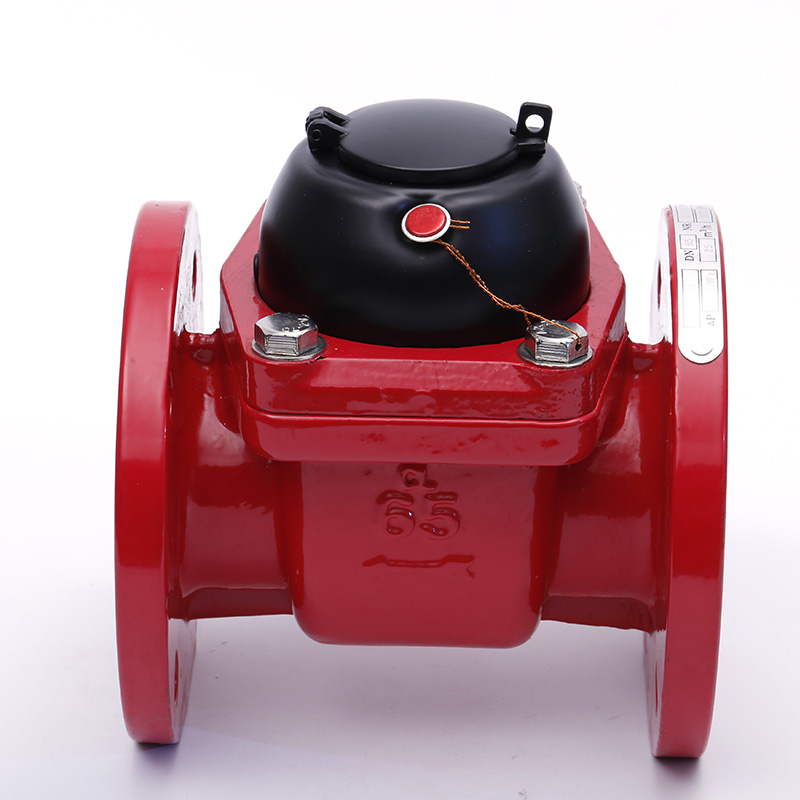
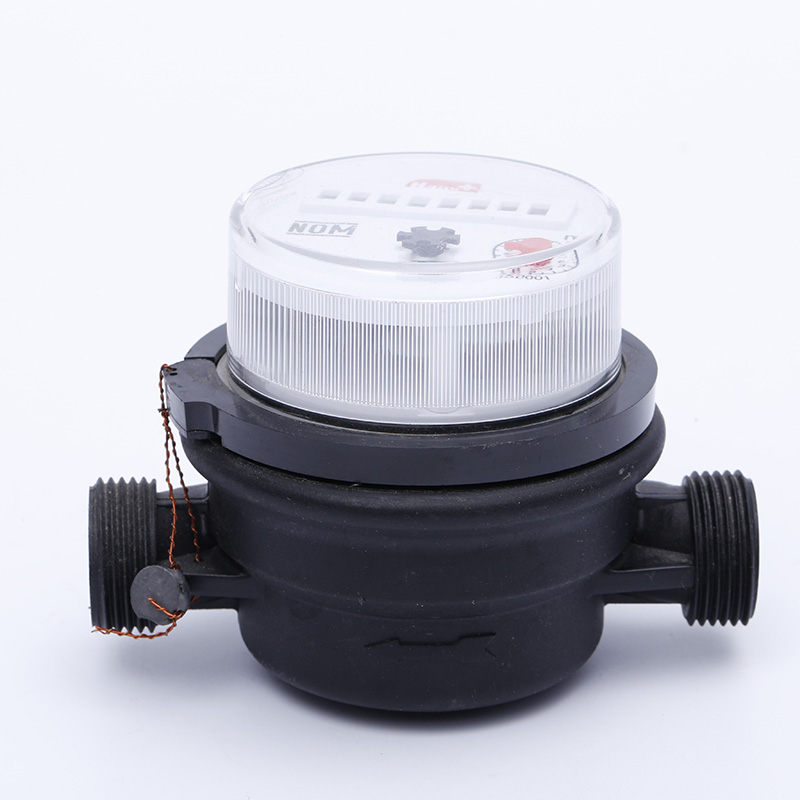
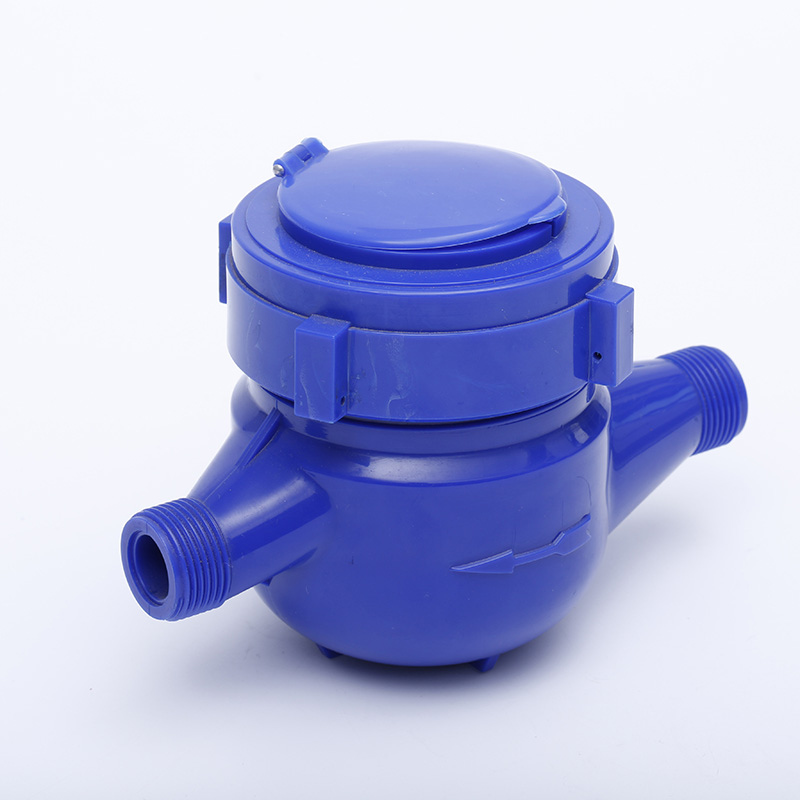
YongZhou with long-term work on flow measurement devices, has been closely associated with the development of the Multi Jet Water Meter and the way its register translates flow into readable consumption data in modern water management systems. Understanding how this small component displays total usage helps clarify why these meters remain widely used in residential and light commercial networks where stable and clear readings are required.
Unlike digital systems that rely on electronic conversion, the register in the Water Meter is a purely mechanical interface that converts rotational motion into cumulative volume display. This mechanism may appear simple at first glance, but it is the result of decades of refinement in hydrodynamic balancing, gear ratio calibration, and wear-resistant design.
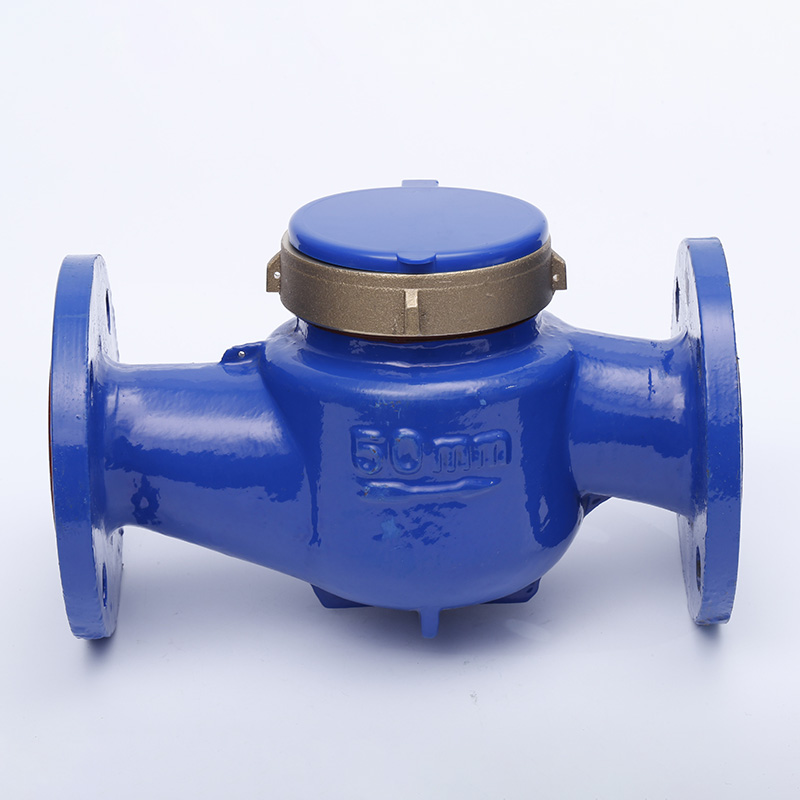
The register is often described as the "reading window" of the meter, but its function goes far beyond displaying numbers. It acts as the final stage in a chain of mechanical energy transfer:
- Water flows into the measuring chamber through multiple inlets
- Impellers rotate based on flow velocity
- The rotation is transferred through a sealed coupling
- A gear train reduces high-speed rotation into readable increments
- The register displays accumulated volume
In the Water Meter, multiple jets of water strike the impeller evenly from different angles. This balanced force reduces vibration and improves measurement stability, especially under fluctuating flow conditions.
The core principle behind total water usage display is proportional rotation. Each full rotation of the internal impeller corresponds to a fixed volume of water. The register translates these rotations into numerical increments.
The transformation from flow to display can be simplified as follows:
- Impeller rotation = water movement
- Gear transmission = scaling of motion
- Register dial = numerical accumulation
This system ensures that every drop passing through the chamber contributes to a cumulative total, which is continuously recorded without manual reset.
One of the reasons the Multi Jet Water Meter structure is widely adopted is its ability to maintain stable impeller movement. Instead of relying on a single directional stream, multiple jets distribute force evenly.
This has several practical effects:
- Reduces localized wear on the impeller
- Maintains consistent rotational speed at low flow
- Improves long-term stability of the register reading
- Minimizes sensitivity to pipe turbulence
In many installations, low-flow conditions (such as dripping taps or partial valve opening) are where measurement errors are most likely. Multi-jet flow distribution helps reduce this issue significantly.
The register assembly is isolated from direct water contact through a magnetic or sealed coupling system. This separation prevents water contamination and reduces mechanical friction inside the display unit.
| Component | Function | Contribution to Total Usage Display |
| Impeller | Rotates under water flow | Converts flow into motion |
| Magnetic coupling | Transfers motion without leakage | Maintains sealed environment |
| Gear train | Reduces rotation speed | Enables readable scaling |
| Dial register | Displays accumulated value | Shows total water usage |
| Protective lens | Shields display | Prevents dust and moisture interference |
Each component works in sequence, ensuring that recorded usage remains stable over time even under continuous operation.
The register typically includes multiple dials or a rolling numeric display. Each digit represents a different scale of measurement, often cubic meters and liters depending on configuration.
A key advantage is that the reading remains intuitive even without technical training. The movement of each digit is slow and incremental, allowing users to visually confirm consumption patterns over time.
In field observations, gradual movement of the lowest digit often reflects small daily variations, while higher digits change only over longer cycles. This layered structure is essential for long-term monitoring.
Although the system is mechanically robust, several environmental and operational conditions can influence reading stability:
- Water quality and sediment content
- Installation angle and pipe alignment
- Flow pressure fluctuations
- Aging of internal bearings
- Air bubbles in the pipeline
The Multi Jet Water Meter design helps mitigate some of these effects, particularly sediment-related issues, because multiple inlet channels reduce clogging risk and distribute flow more evenly.
| Feature | Single Jet System | Multi Jet System |
| Flow distribution | Single directional | Multiple balanced jets |
| Low-flow sensitivity | Moderate | High stability |
| Sediment resistance | Lower | Improved |
| Register consistency | Variable | More uniform |
| Long-term readability | Dependent on conditions | Generally stable |
This comparison highlights why multi-jet structures are frequently used in environments where consistent long-term tracking is required.
Although often overlooked, the register is the only visible interface for interpreting water consumption data. Any instability in this component directly affects how usage is understood.
A well-calibrated register ensures:
- Clear numerical progression
- Minimal reading ambiguity
- Stable long-term accumulation
- Reduced misinterpretation during inspection cycles
This makes the design of internal gearing and sealing as important as the flow chamber itself.
In production environments, testing machines simulate different flow rates to verify register response accuracy. These tests often include:
- Continuous high-flow simulation
- Intermittent low-flow cycles
- Reverse pressure exposure checks
- Long-duration wear testing
Such evaluations ensure that the register maintains consistent tracking across varied real-world conditions, especially in systems where water usage is highly irregular.
The register in a Multi Jet Water Meter serves as a precise mechanical translator between water movement and cumulative usage display. Through balanced jet flow, sealed transmission, and carefully engineered gear reduction, it provides a stable and readable record of consumption over time. This structure continues to support reliable monitoring in diverse installation environments.
Within this context, products such as the Yongzhou® Water Meter developed by Ningbo Haishu Yong Zhou Meters Co.,Ltd reflect how mechanical design principles and long-term testing contribute to consistent performance in everyday water measurement applications.